

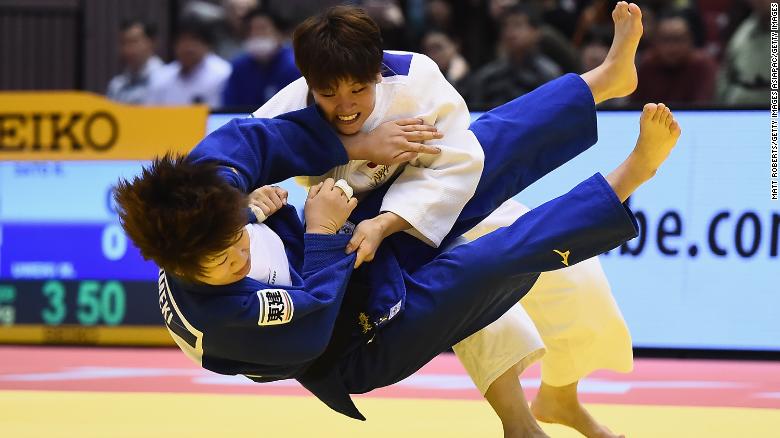
Judoka Ruika Sato (white) and Mami Umeki (blue) battle it out in December before the rule changes.
Story highlights
- Judo's rules have changed for this year with two Waza-ari scores meaning Ippon
- Changes were first made to move away from wrestling and secure its Olympic spot
- Former world champion Neil Adams argues it has made the sport the best it's ever been
(CNN)It's a sport rooted in ancient traditions, but judo has earned a reputation for ripping up the rule book.
Judo, as has become customary, marked the start of a new year by issuing the latest changes to its code of dos and don'ts.
Sponsor Content
By practicing judo, children can discover the benefits of participating in sport as a way of
Content provided by Judo Federation
They are alterations that have left some fans frustrated. One Twitter user posted "please don't change the rules for a while," while a Facebook commentator described the latest tweaks as "a terrible change."
But former world champion and two-time Olympic medalist Neil Adams believes the ongoing rule changes have made judo "the best it's ever been."
Adams contends the International Judo Federation (IJF) has acted to prevent judo becoming too similar to traditional wrestling, particularly given the Olympic Games already has Greco-Roman and freestyle wrestling events.
Over the years, slowly but surely, the rules have been altered to the betterment of the sport, according to Adams, although he accepts that it has divided judokas along stylistic lines.
"Obviously the wrestlers weren't happy but it's appealed to the traditionalists, who have embraced it," he tells CNN. "Of course, you'll never get everyone agreeing 100% but these have for the most part been changes for the better.




More from CNN
 Novak Djokovic's struggles continue
 John McEnroe is paid 10 times what Martina…
 Greek football club owner invades pitch with gun
 Will Roger Federer play the French Open?Novak Djokovic's struggles continueJohn McEnroe is paid 10 times what Martina…Greek football club owner invades pitch with gun
Stories for you
 Roger Federer loses to Juan Martin del Potro in Indian Wells…
 Ronaldo, Salah, Icardi bag four; Race for European Golden Shoe…
No comments:
Post a Comment
add